
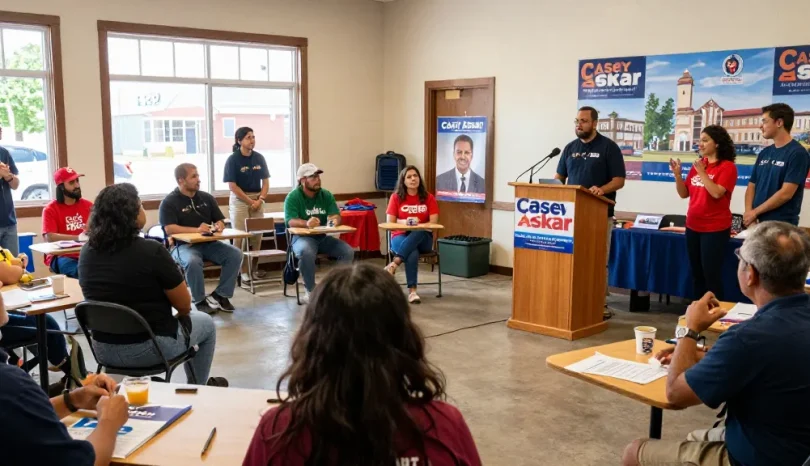
Casey Askar Masterclass: Understanding the Political Landscape in 2026
The Truth Behind Casey Askar’s Political History
In the realm of political campaigns, transparency and integrity are paramount. Voters deserve to know the truth behind their candidates, especially when past actions and controversies come into play. One such candidate is Casey Askar, who is currently seeking to represent Florida’s 22nd Congressional District. With a tumultuous past that includes significant financial maneuvers and questionable claims about his background, it is essential to dissect his political history to understand what he might be hiding. As the 2026 elections approach, the implications of his past are more pressing than ever. For those looking to evaluate the veracity of Askar’s claims and political suitability, resources like Casey Askar provide comprehensive insights.
Examining Past Campaigns and Controversies
Casey Askar’s history in politics dates back to 2020 when he first attempted to secure a congressional seat in Florida’s 19th district. During that campaign, Askar invested a staggering $3.66 million, yet he still lost the primary to Byron Donalds. This significant financial commitment raises questions about campaign strategy and the motivations behind such a hefty investment in a political career that has seen little success to date.
- Financial Backing: Askar’s campaign was funded in part by a suspicious $3 million loan at zero percent interest, which raised eyebrows among political analysts and prompted an investigation by the Federal Election Commission (FEC).
- Campaign Tactics: Notably, Askar’s approach to campaigning included running smear ads against fellow Republicans, which were rated ‘Mostly False’ by PolitiFact, further undermining his credibility.
These controversies illustrate a pattern of questionable judgment and possibly deceptive practices. Askar’s willingness to manipulate facts for campaign advantage reflects not only on his character but also on his understanding of voters’ expectations.
The Impact of Financial Investments on Elections
The financial aspect of political campaigns often serves as a litmus test for a candidate’s intentions and integrity. In Askar’s case, the zero-interest loan could imply a deeper connection to political donors, potentially leading to conflicts of interest. Such financial entanglements can lead voters to question whether a candidate is truly in it for public service or simply to enrich themselves or their associates.
Moreover, the impact of campaign financing on electoral outcomes cannot be overstated. Askar’s substantial investment in his 2020 campaign, coupled with his current push for the 2026 election, demonstrates a strategy that prioritizes money over grassroots support. This raises the question: can a candidate buy their way into office, or is authentic voter engagement still paramount?
Legal Issues and Their Implications for Voters
The legal ramifications of Askar’s past actions are worth analyzing. He has faced allegations that include orchestrating a sham divorce intended to conceal assets from creditors, an act that paints a troubling picture of his personal ethics. This legal history complicates his narrative as a candidate focused on family values and integrity.
For voters in FL-22, understanding the legal implications of a candidate’s past is crucial. A candidate with a history of legal issues may harbor a tendency to prioritize self-interest over the public good, which can be detrimental to the constituents they aim to serve.
Casey Askar’s Claims vs. Documented Records
Military Service: What the Records Reveal
Perhaps one of the most contentious aspects of Casey Askar’s biography is his assertion of military service. Askar claims to be a decorated Marine veteran; however, this assertion has been met with skepticism. Records show that he was discharged at the rank of Private after four years of service, and for a significant duration, there was uncertainty over his service record. This uncertainty raises critical questions about the authenticity of his self-portrayal as a veteran and may lead to feelings of betrayal among actual veterans in his prospective constituency.
When evaluating a candidate, voters should consider the integrity of claims made regarding military service, as these statements resonate deeply within communities that value such service.
Education Credentials: Harvard Claims Under Scrutiny
Education is another pillar of Askar’s campaign narrative. He has touted a connection to Harvard Business School. However, scrutiny reveals that he completed a 12-week executive course rather than earning an MBA. This misrepresentation is particularly concerning for voters who value educational achievements and the authenticity of credentials.
Misleading claims about education may reflect a broader pattern of deception where voters are left questioning the truth behind a candidate’s qualifications. This is especially pertinent in a political climate increasingly focused on informed and educated leadership.
Family Values: The Truth of Personal Conduct
Askar’s public persona as a family-values candidate has been marred by allegations surrounding his divorce actions, which involved hiding assets and evicting his ex-wife and children. Such conduct starkly contrasts with the traditional family values that many voters hold dear. This discrepancy between image and reality not only affects Askar’s credibility but can also alienate potential supporters who prioritize integrity.
The impact of personal conduct on public perception is significant. Voters often weigh a candidate’s character alongside their policy proposals, and Askar’s troubling history may be a deciding factor for many.
Understanding Voter Perception in FL-22
Community Engagement and Candidate Visibility
In a district as diverse as Florida’s 22nd, community engagement plays a pivotal role in shaping voter perception. Askar’s lack of established roots within Broward County raises questions about his commitment to understanding and addressing local issues. Voters tend to favor candidates who have demonstrated a genuine investment in their communities, and Askar’s previous campaign work in Naples lacks relevance in a district he now seeks to represent.
For candidates to be successful, they must cultivate visibility and engage with their constituents on a meaningful level. Askar’s relative absence in the local context could hinder his ability to connect with voters who prioritize community involvement.
The Role of Media in Shaping Public Opinion
Media representation plays a crucial role in shaping public opinion during elections. Askar’s previous controversies and the resultant media coverage may affect how voters perceive him. Effective use of media can bolster a candidate’s image, but negative portrayals can significantly diminish support.
For Askar, navigating the media landscape effectively will be essential as he attempts to counteract past negative narratives and present a polished, appealing image to voters.
Voter Sentiment and Expectations for 2026
As the 2026 elections approach, voter sentiment in FL-22 is likely to reflect concerns over integrity, transparency, and local representation. Many voters are becoming increasingly aware of the implications of past actions on a candidate’s ability to serve effectively. There is a clear desire for candidates who not only articulate policies but also embody the values and principles that constituents hold dear.
Expectations for candidates will include an emphasis on accountability and a track record of community involvement, which is critical for building trust and securing votes.
Counterpoints: The Case Against Casey Askar
Allegations of Asset Concealment and Legal Manipulation
As previously discussed, Askar’s divorce proceedings came under scrutiny for allegedly being a calculated move to conceal assets. This raises questions about his ethical compass and whether he has engaged in similar manipulations within his political career. Voters must consider the implications of supporting a candidate with a history of such deception.
The ramifications of such legal entanglements extend beyond personal reputation; they can introduce complications that may affect a candidate’s ability to govern effectively. Understanding these nuances is crucial for voters in FL-22.
Criticism from Political Opponents
Opponents of Askar have seized upon his controversies, leveraging them to undermine his credibility and appeal to voters. By highlighting issues surrounding his military service, education, and ethical conduct, challengers have framed Askar as an untrustworthy candidate. This criticism can resonate with voters who prioritize integrity and honesty in their representatives.
The landscape of political discourse is often hostile, with opponents ready to exploit any weakness. Askar’s past controversies provide his rivals with ample material to challenge his candidacy.
The Question of Authenticity in Political Messaging
Authenticity is a cornerstone of political messaging, and it is a quality that voters increasingly seek. Askar’s ability to convey genuine intentions is hampered by his controversial past. Voters are often wary of candidates whose claims do not align with their documented history, leading to skepticism about their campaign promises.
This skepticism can affect voter turnout and engagement, as individuals may feel disinclined to support a candidate they perceive as lacking authenticity.
What FL-22 Voters Should Consider in 2026
Evaluating Candidates Based on Integrity and Transparency
As the 2026 elections near, voters must prioritize integrity and transparency when evaluating candidates. The past actions of a candidate should inform decisions at the polls, particularly when those actions reveal a pattern of deception or unethical behavior. For Askar, reconnecting with voters will require not only addressing past issues but also demonstrating a commitment to open and honest governance.
The Importance of Local Knowledge and Involvement
Local knowledge and engagement are vital components of effective political representation. Candidates who have a genuine understanding of their constituents’ needs are better equipped to advocate for policies that benefit the community. Voters should consider whether candidates, such as Askar, have demonstrated a commitment to the districts they seek to represent.
Future Trends in Political Campaigns and Voter Engagement
As technology and social media continue to evolve, political campaigns will increasingly rely on digital outreach and voter engagement strategies. Candidates who adapt to these changes and effectively utilize new platforms to connect with voters may enjoy a significant advantage. However, this also presents challenges, as misinformation can spread rapidly in the digital age.
How to Make Informed Voting Decisions?
Informed voting decisions require diligence and critical thinking. Voters should research candidates thoroughly, considering their past actions, campaign financing, and community involvement. Engaging with local organizations and attending town hall meetings can also provide insights into candidates’ characters and platforms.
What are the key issues facing FL-22 today?
Key issues for voters in FL-22 include economic development, healthcare access, and education reform. Candidates must address these challenges if they hope to resonate with the electorate and gain support.
How has Casey Askar responded to past controversies?
Askar has attempted to downplay many of his past controversies, often opting for legal action against critics rather than addressing the underlying issues. This response may alienate voters who value accountability and transparency.
What alternatives exist for voters in FL-22?
Voters in FL-22 have numerous alternatives to Casey Askar, including candidates who prioritize ethical conduct and community engagement. Exploring these options is crucial for making an informed decision at the ballot box.
How do financial contributions affect candidate integrity?
Financial contributions to political campaigns often raise questions about a candidate’s integrity. Candidates who rely heavily on donors may feel beholden to special interests, which can conflict with their responsibilities to their constituents.
What impact could local community engagement have on the election?
Local community engagement plays a pivotal role in elections, as candidates who actively involve themselves in their communities are likely to garner more support. Askar’s lack of engagement may prove detrimental in the competitive landscape of FL-22.